
HERMETIC RISK ENGINE
Threat modeling that measures, not labels.
CVSS v3.1. Bayesian probability. Measured control effectiveness.
Chained into one number — visible, defensible, yours.
WHAT SCVLTORI IS
Scvltori is a threat modeling platform.
You describe your architecture — its components and the data moving between them — and seven frameworks analyze it in parallel.
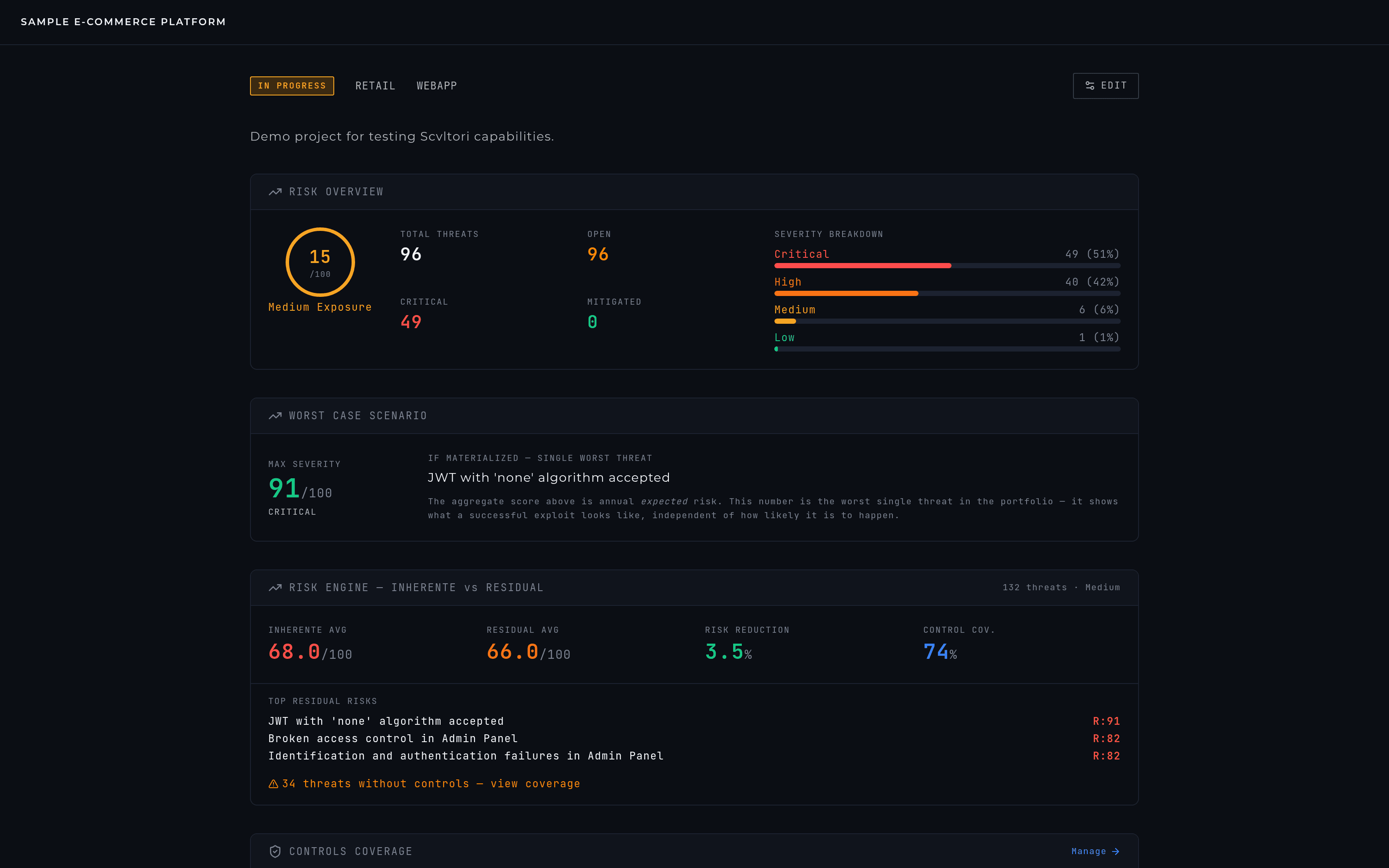
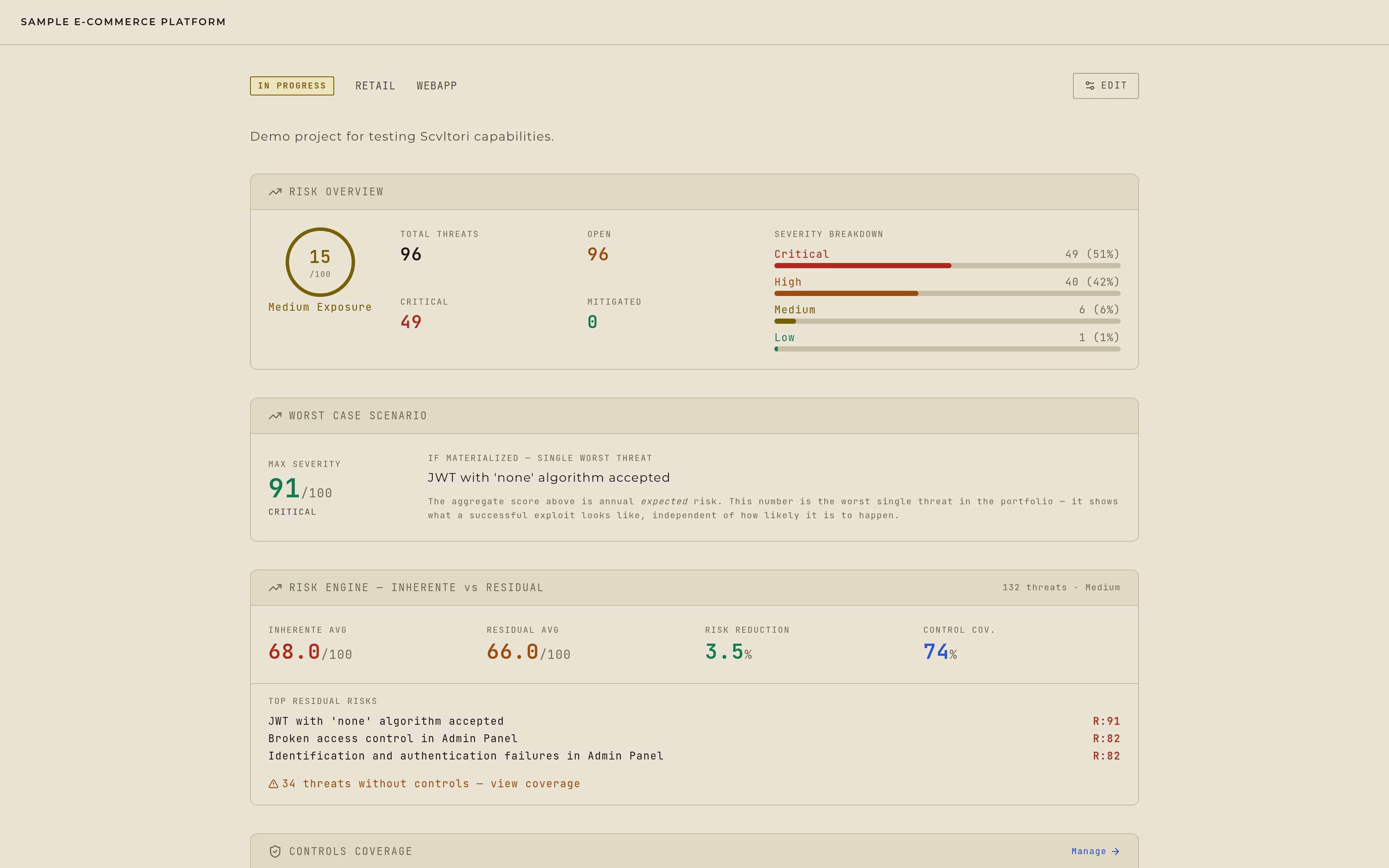
Every threat comes back with a risk score you can trace to its inputs: CVSS v3.1, evidence-adjusted probability, and the measured effectiveness of the controls you already have.
- CVSS V3.1open industry standard for technical severity
- EVIDENCE-ADJUSTED PROBABILITYa category baseline moved by what is true in your environment
- MEASURED CONTROL EFFECTIVENESSwhat the safeguards you already run actually reduce
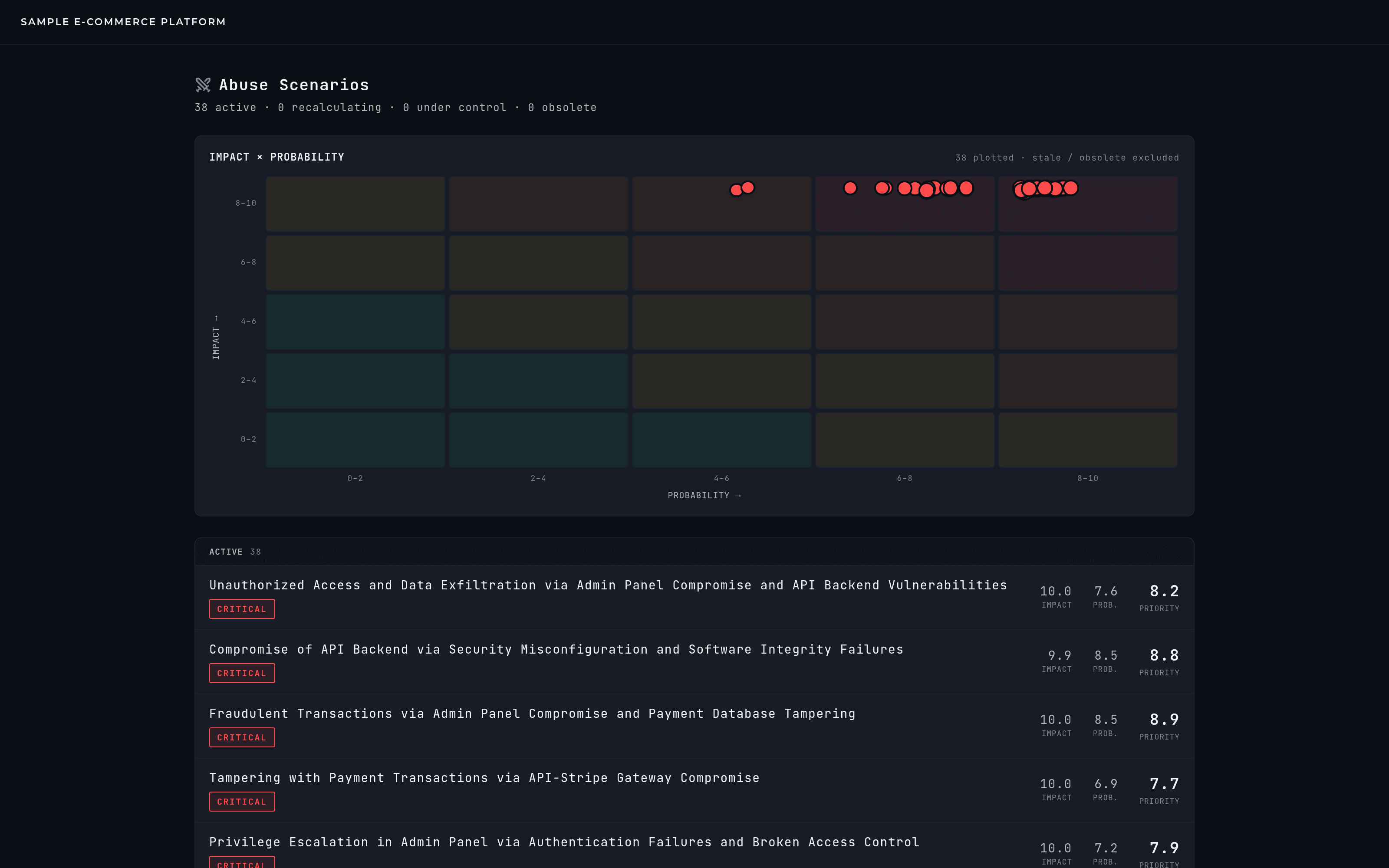
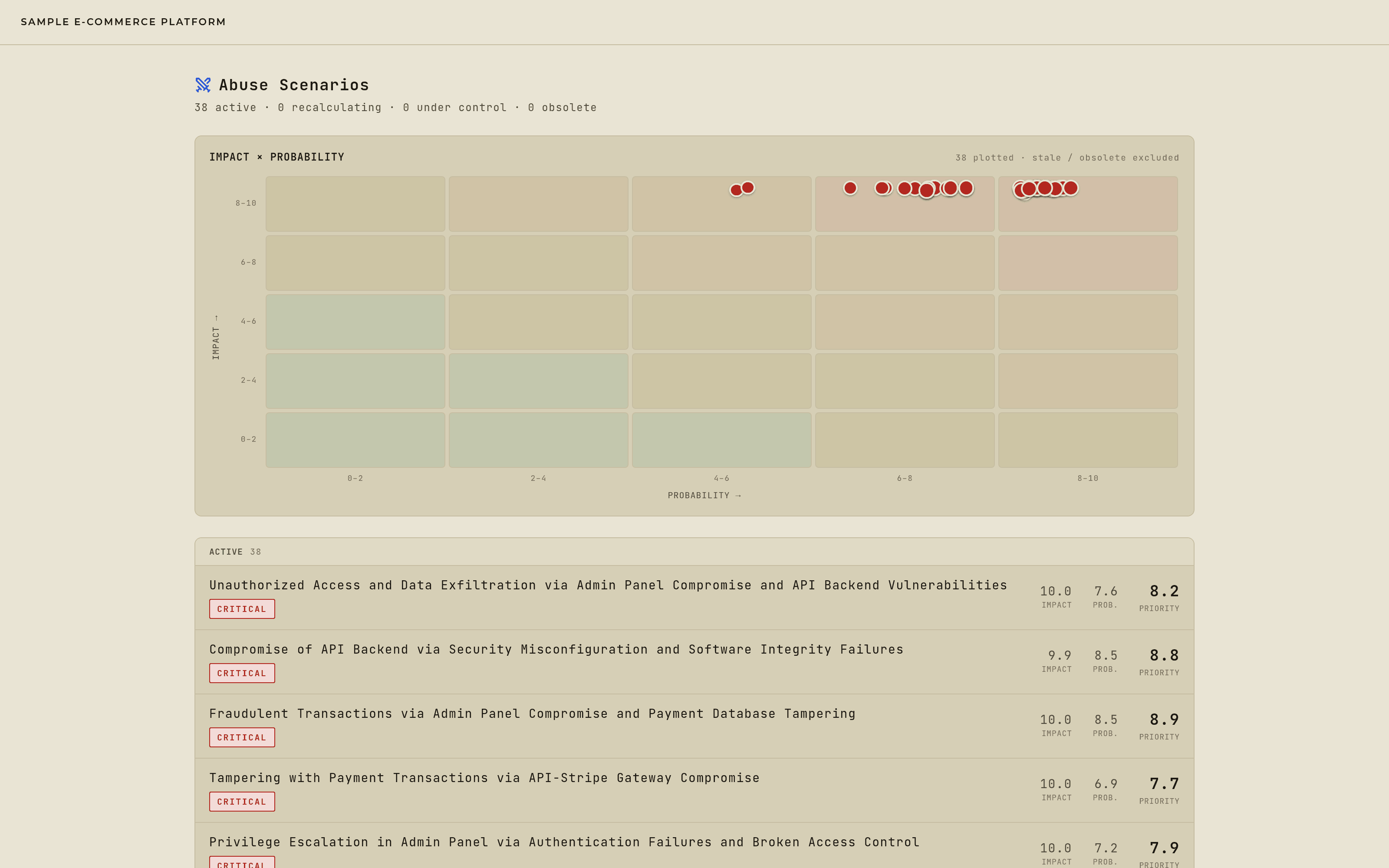
And because nobody gets breached by a single flaw, it chains those threats into abuse scenarios: the specific sequence by which your system ends up compromised, each with its own impact and priority.
Three medium findings nobody prioritizes separately can be, together, your breach.
THE PROBLEM
Checklists that don't know your architecture.
AI that hallucinates threats with nothing to show its work.
Scores with no formula behind them — High, Medium, Low, and nothing else.
That's not a risk score. That's a traffic light.
THE PIPELINE
ASSETS & DATAFLOWS
Your actual architecture. Not a generic template.
SEVEN FRAMEWORKS, IN PARALLEL
STRIDE. MITRE ATT&CK. LINDDUN. PASTA. NIST AI RMF. OWASP Top 10. SBOM.
CONVERGENCE
Threats found by more than one framework collapse into one canonical finding — confirmed, not duplicated.
THE SCORE
CVSS v3.1. Bayesian probability. Measured control effectiveness.
One continuous number, not three colors — so you know exactly what to fix first.
ABUSE SCENARIOS
Nobody gets breached by one flaw. The scored threats get chained into the sequences that actually end in a breach — each with its own impact, probability and priority.
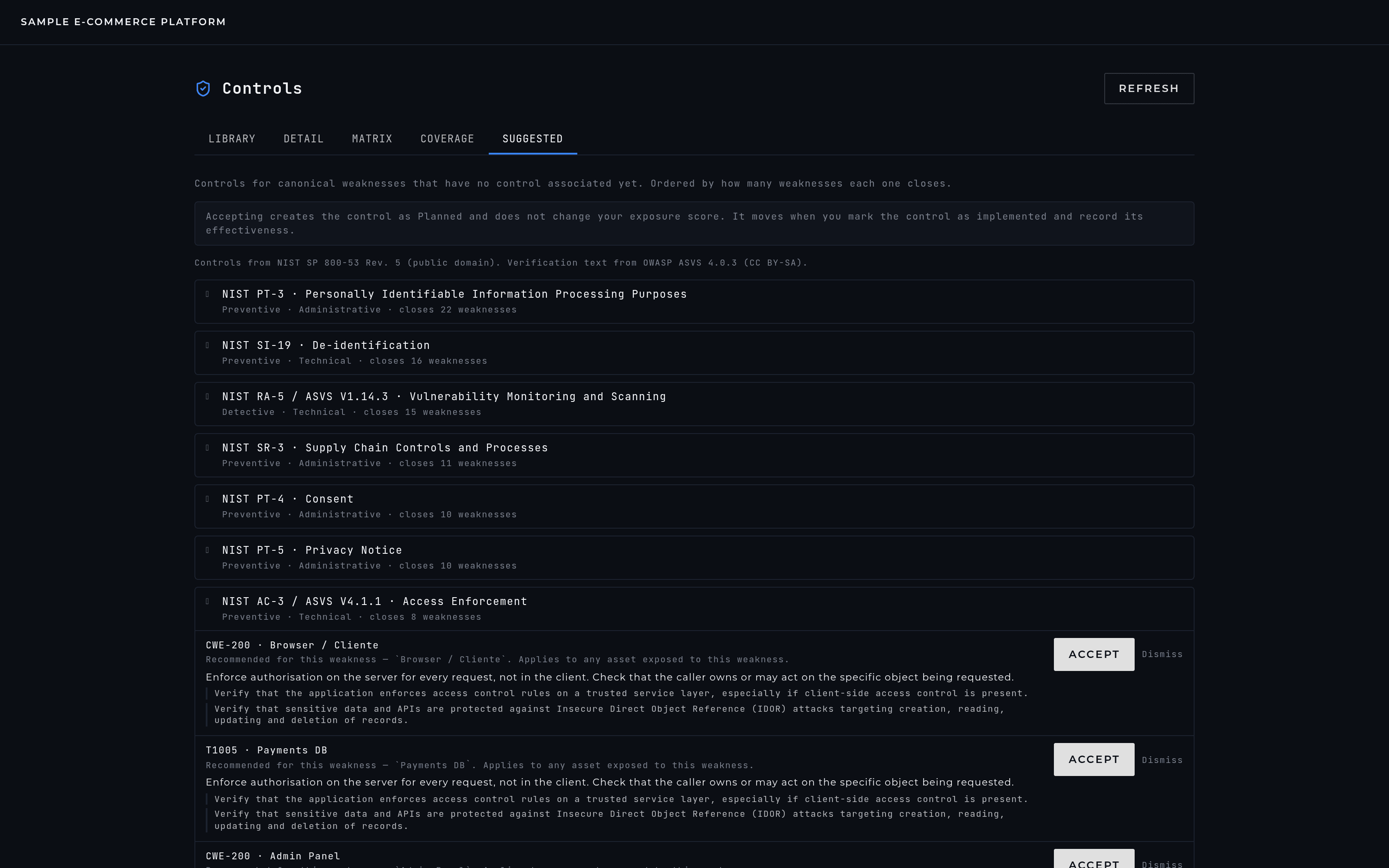
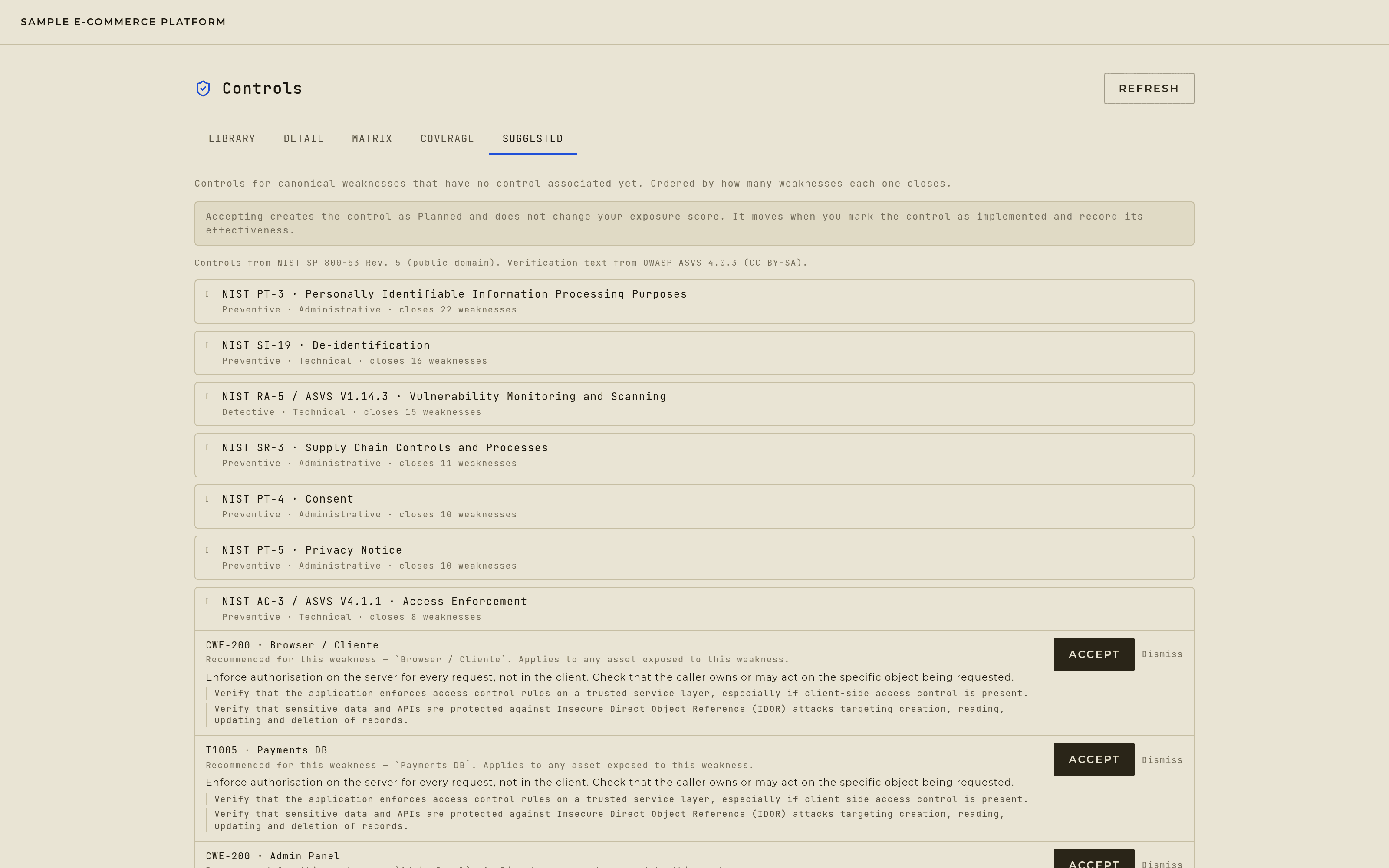
RECOMMENDED CONTROLS
Every weakness without a control gets the ones from the catalog that fit.
Accepting adds it to your plan — the score moves when the control exists.
THE CHAIN
One threat, alone, is a line item. Chained with the right others, it's how you actually get breached.
SUPPORT PORTAL COMPROMISE → CROSS-TENANT DATA EXFILTRATION
- 01
A reused session token grants access to the internal support portal.
- 02
A missing tenant check in an internal API exposes other customers' records.
- 03
Unencrypted PII and payment fields are readable in bulk.
Three findings a checklist would list separately — and miss the story connecting them.
THE PRODUCT
An analysis tool, not a dashboard.
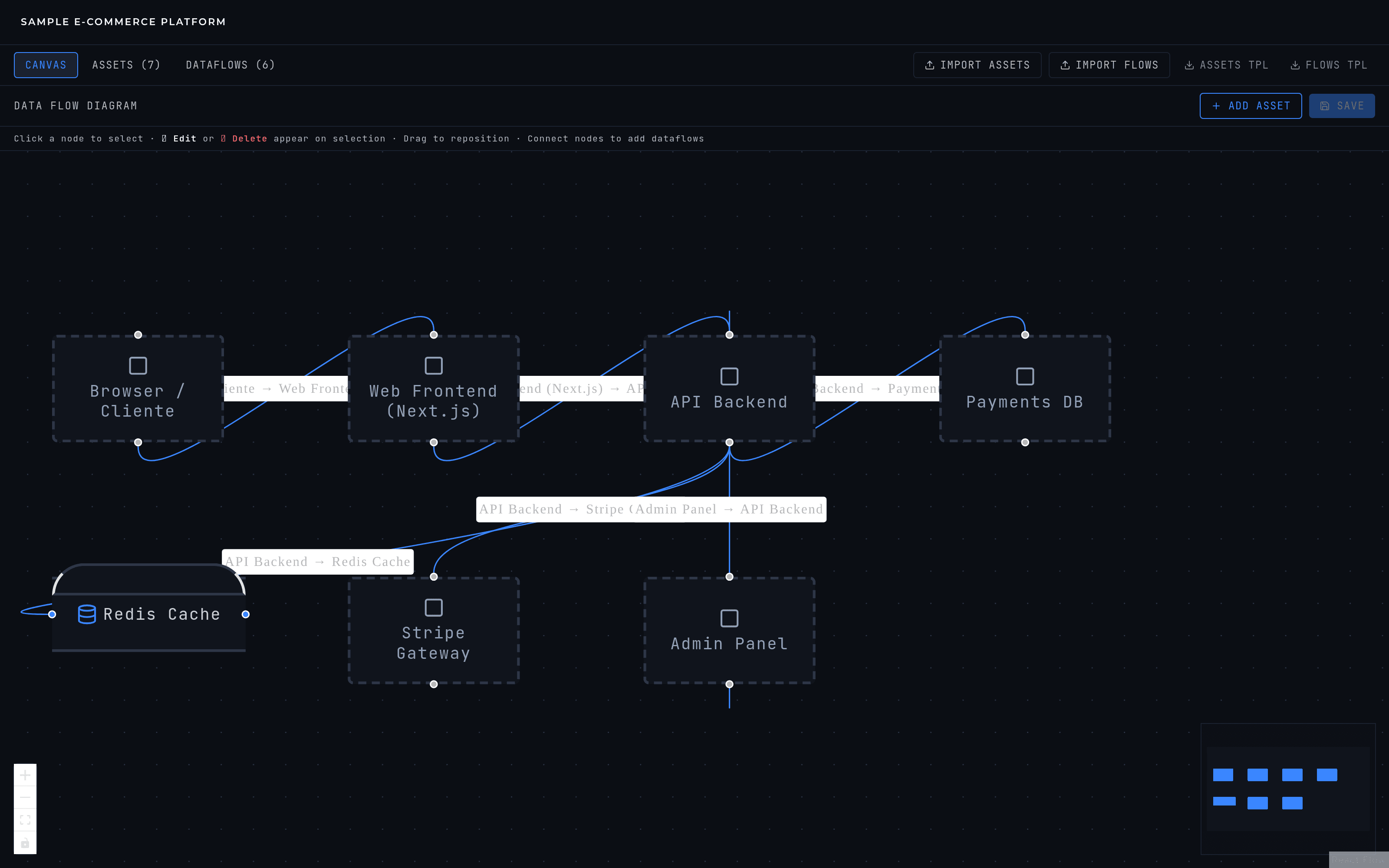
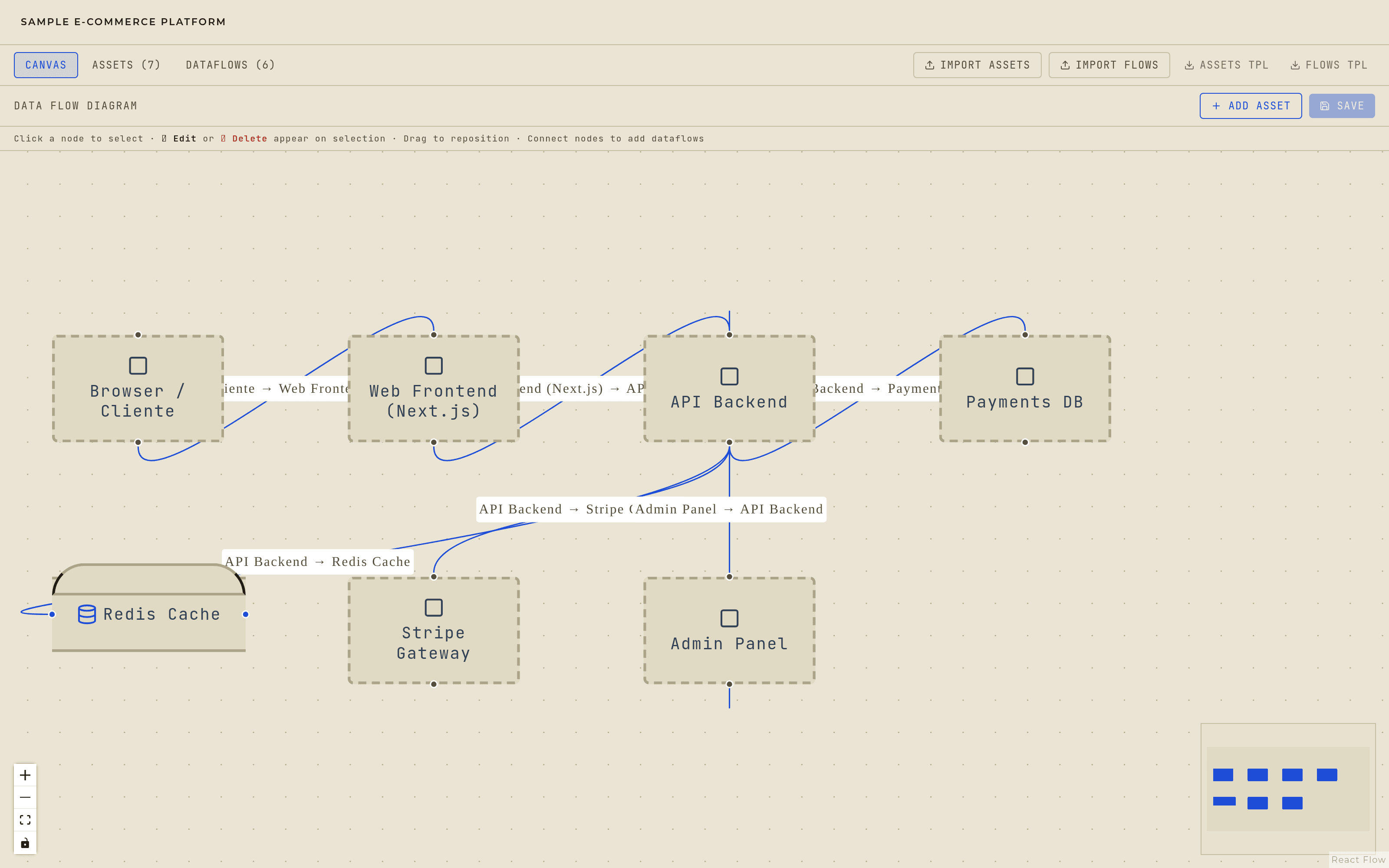
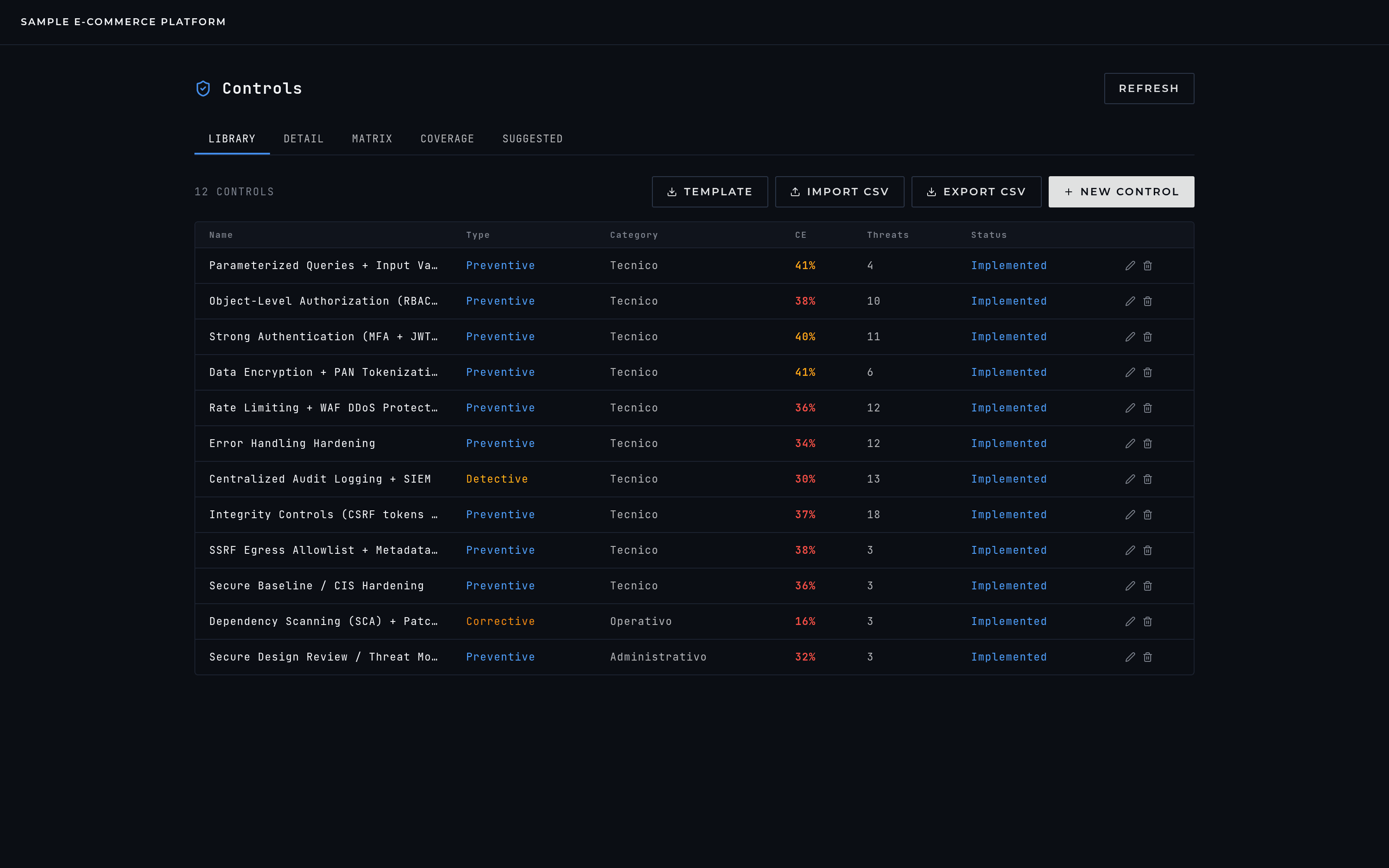
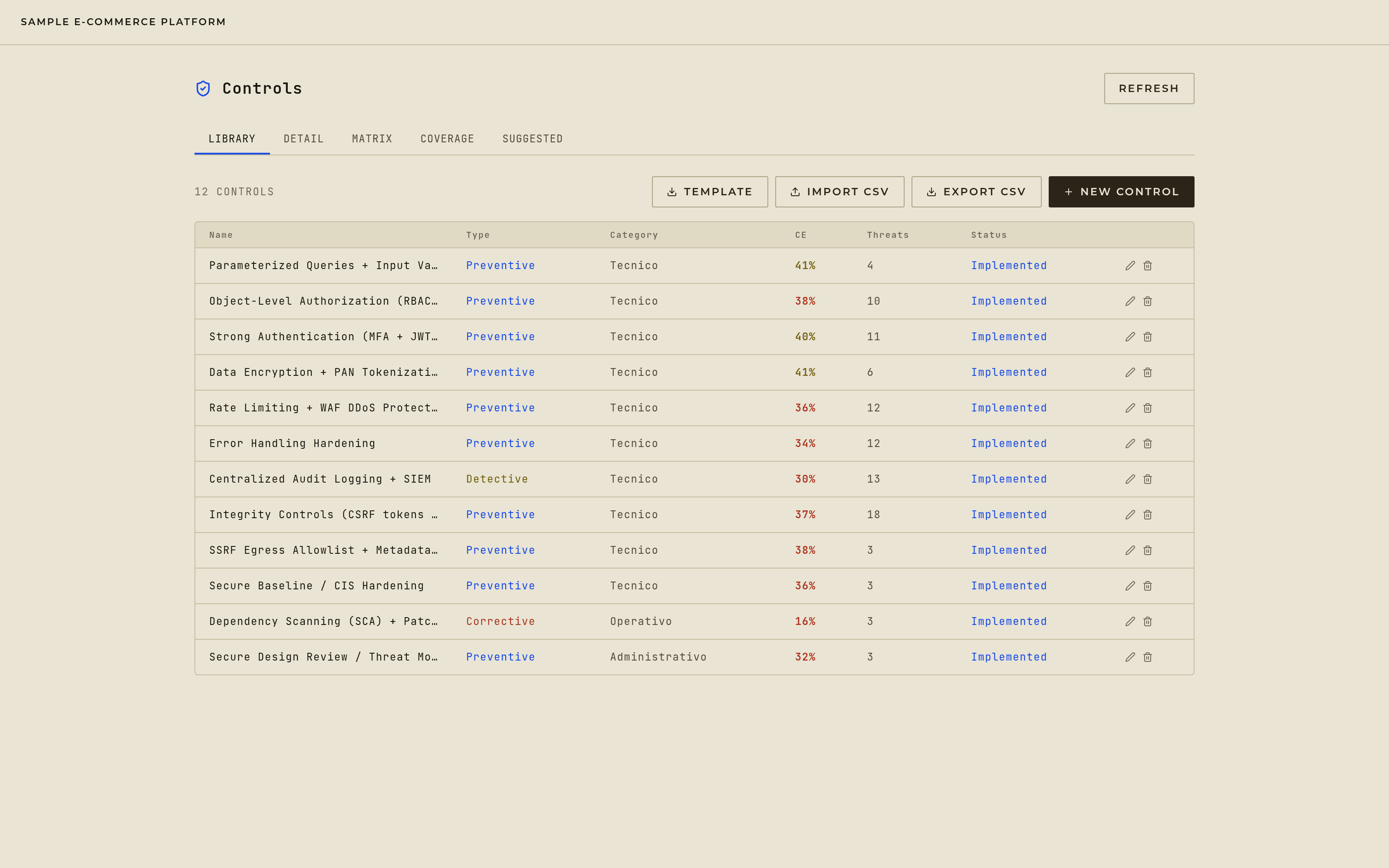
01 / 05
THE FRAMEWORKS
Threat modeling isn't one methodology — it's several, each built for a different kind of system. We run all seven, so nothing falls in the gap between them.
DOCUMENTATION, IN THE OPEN
Every screen, every workflow, every framework — documented and public, not locked behind a login. Read it before you request a demo, not after.
THE DEMO
See it on your own architecture, not ours.
Bring one real project — a handful of assets, a couple of dataflows. We'll run it through the engine live, not a canned demo script.