

Frameworks
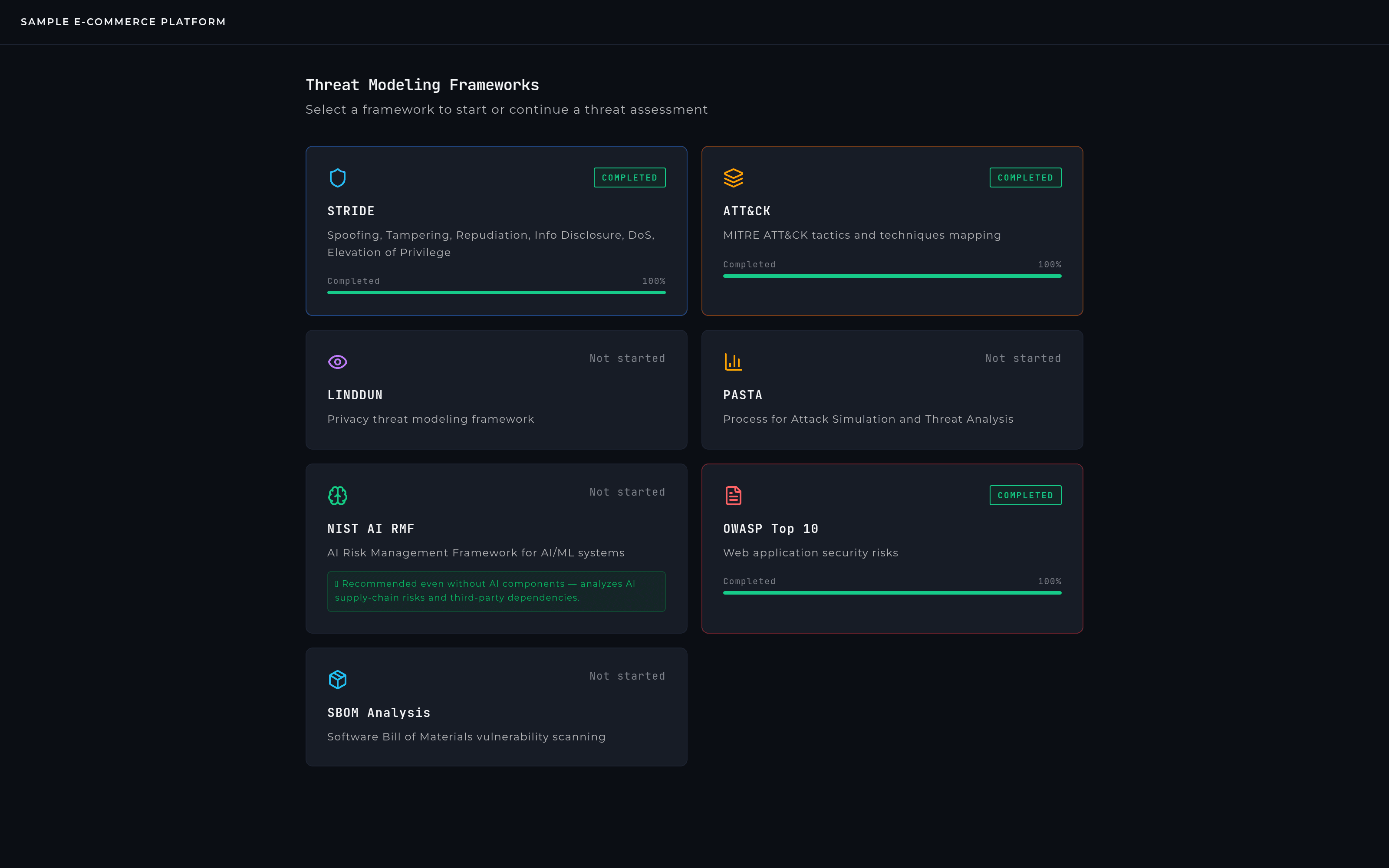
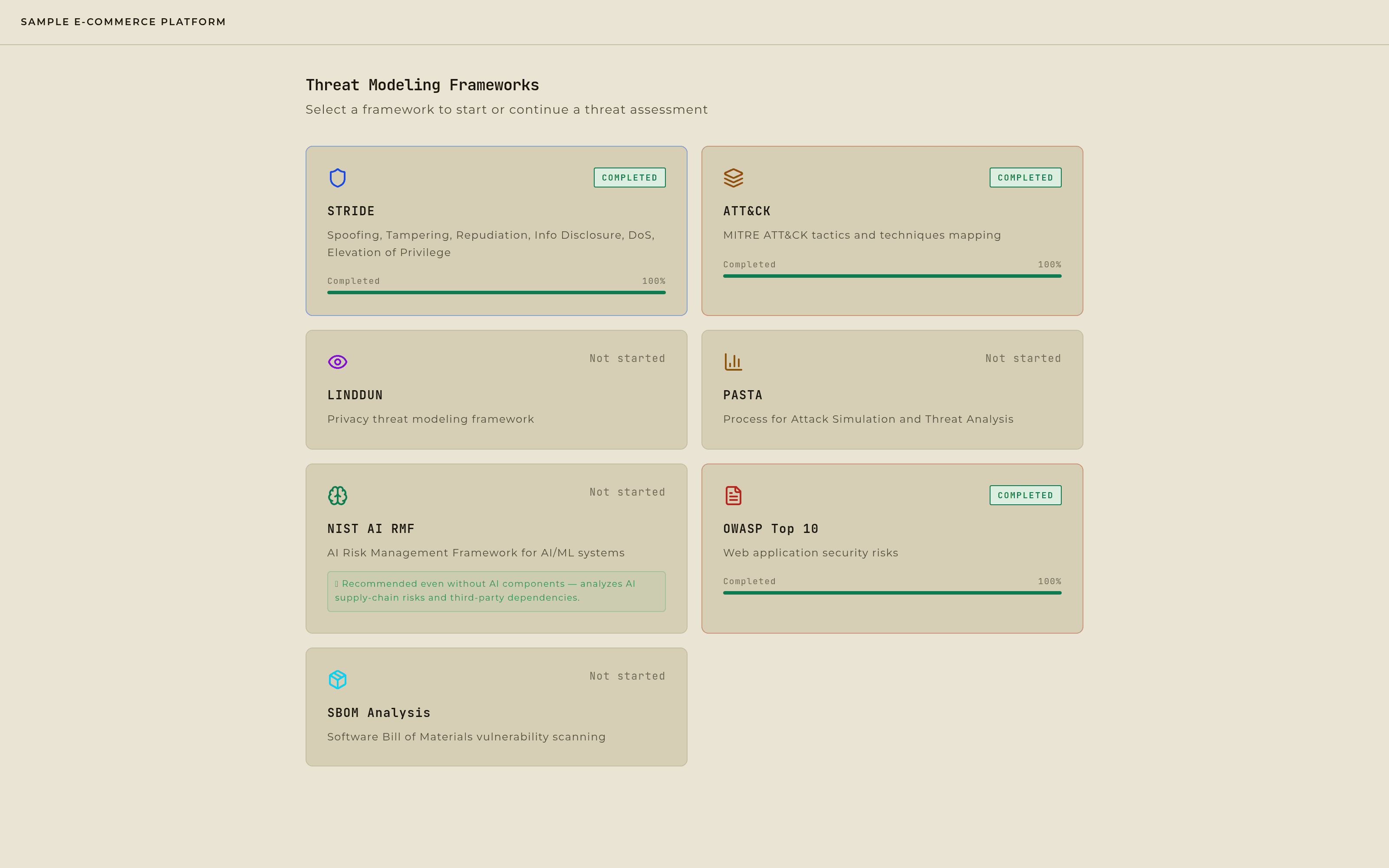
No single framework catches everything — each one was built to answer a different question about the same system. You start each from its own workspace; once running they work concurrently, and Scvltori reconciles what they find.
What each one is actually asking
- STRIDE
- what can this specific component do wrong? The general-purpose baseline — Microsoft's original framework, still the right starting point for any system.
- MITRE ATT&CK
- what techniques does a real attacker use? Built from documented real-world incidents, and the natural fit for teams already doing threat hunting or incident response.
- LINDDUN
- where does this system violate privacy — even without an attacker? The only framework here that asks this question independent of whether anything was technically "broken into."
- PASTA
- what does this threaten in business terms? Where STRIDE says a component is vulnerable, PASTA says what that vulnerability actually costs — in money, in regulatory exposure — if it's exploited.
- NIST AI RMF
- what risk does this AI or ML component introduce? Covers the threats specific to models — poisoning, extraction, hallucination, bias — that the other six frameworks aren't built to see.
- OWASP TOP 10
- what are the most common ways web applications actually get broken? More specific and more directly actionable for developers than STRIDE's broader categories.
- SBOM
- which third-party components are a liability? Supply-chain risk — the dependencies and libraries a system is built on, not the system itself.
How they reconcile
When two or more frameworks flag the same underlying issue on the same component, Scvltori collapses it into one canonical finding instead of listing it twice — and a threat multiple methodologies agree on is treated as a higher priority than one only a single framework caught. That convergence is calculated per component, not project-wide: the same category of issue showing up on two different components stays two separate findings, each with its own score.
Choosing frameworks for your system
STRIDE is the floor for any project. Beyond that, it depends on what you're building:
- WEB APPLICATION WITH USER DATA
- STRIDE + OWASP Top 10 + LINDDUN.
- FINANCIAL OR PAYMENTS SYSTEM
- STRIDE + PASTA + MITRE ATT&CK.
- ANYTHING WITH AN AI OR ML COMPONENT
- STRIDE + NIST AI RMF, on top of whatever else the system needs.
- A FORMAL AUDIT OR FULL REVIEW
- all seven.
What the analysis actually reads
Three inputs, in order of how much they matter: your project description (what the system does, who uses it, what data it touches), your assets, and your dataflows. There's no separate configuration step — the richer those three are, the more specific and useful what comes back, and a handful of well-described assets consistently outperforms a large pile of vague ones.